Empowering Youths for the Future: International Research Collaboration to Establish a Resource Centre to Enhance Employment Skills and Improve Sexual and Gender-based Violence Response in Kenya Takes Shape
This summer marked a significant milestone for a research collaboration between Kenyatta University (Kenya) and the University of Sussex (UK). The research study led by Dr Anne Gatuguta (Brighton and Sussex Medical School, University of Sussex) and Dr Purity Muthima (Kenyatta University) aims to create a sustainable mentorship and resource centre, the Safety and Transferable Skills resource Hub (STaSH), to provide structured guidance, skills training and exposure opportunities for higher education students and early-career professionals. By enhancing transferable skills and addressing sexual/gender-based violence (SGBV), the project targets two critical barriers that hinder women’s career progression and employability. Emerging evidence from the study show gender stereotypes are highly entrenched in employability skills reflecting the deep-rooted cultural perceptions that continue to shape career opportunities.
Over the summer, local and international partners came together for discussions on skills gaps and development, career readiness, and empowerment. Knowledge exchange and stakeholder engagement were at the core of the activities with international team visits and stakeholder
workshops taking place.
Summer Activities at a Glance
The research team carried out several activities that are crucial to the success of the project:
Training Workshops: Research assistants participated in a two-days hands-on training workshops covering research ethics, informed consent, qualitative methods, conducting research on sexual and gender-based violence and field safety. The sessions equipped the research assistants with skills to conduct ethical and rigorous research. Practical role-plays and interactive debates helped participants build confidence in collecting quality data for the study.
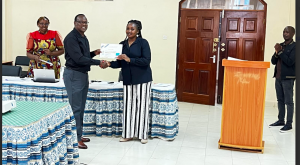
One of the participants, Salome Esendi, receives a certificate from trainer Dr. Willy Mwangi. |
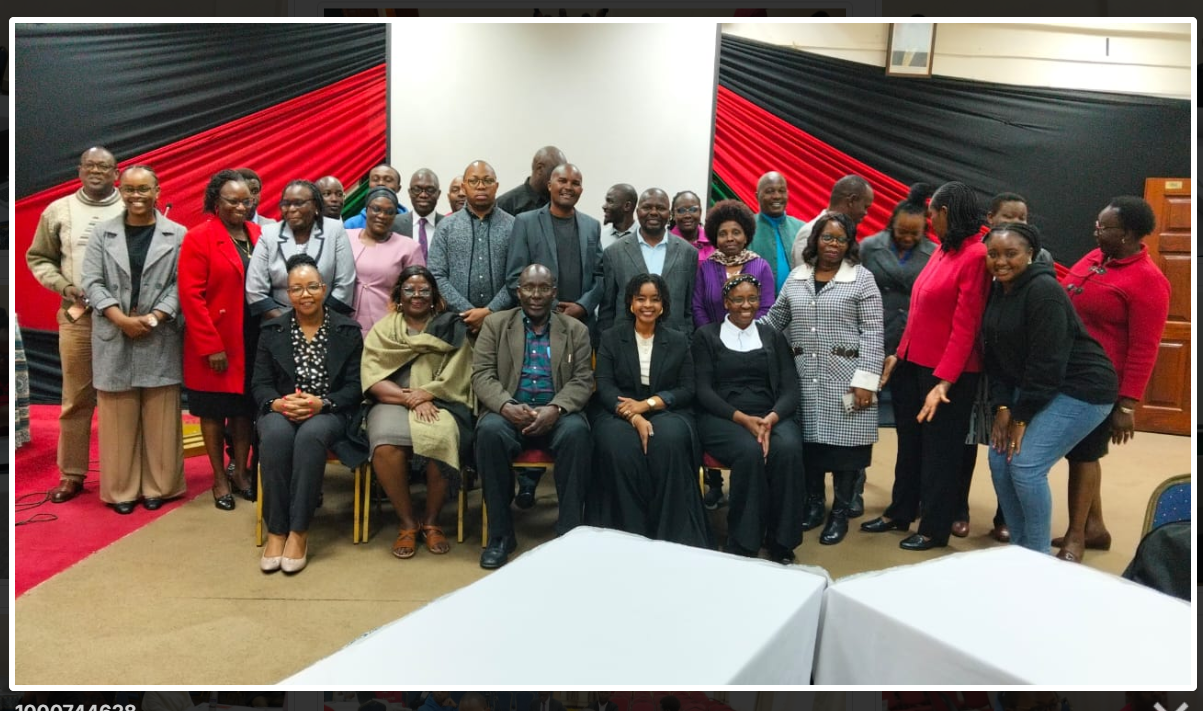
Stakeholders’ Meeting: Representatives from academia, non-governmental organisations, and employment industry including the Federation of Kenyan Employers gathered at Kenyatta University to discuss the centre’s vision and share their own experiences on youth employment and transferable skills training. Participants reported that the study was timely and highlighted various gaps that the centre and the study would address. Data shared during this meeting will help ensure that interventions developed will be relevant to local needs. Participants, who were both present in-person and online, also expressed their commitment to sustained collaboration and resource sharing. The workshop was also attended by British Council’s representative in Kenya, Mary Ndinguri (Programme Manager for Higher Education), who commended the team on their work and emphasised British Council’s commitment to working with partners, including STaSH, to advance gender, equality, employability and innovation in higher education. Our impact is already being felt with the study receiving good coverage from local media: see news item here.

Stakeholders who attended the workshop held at Kenyatta University |
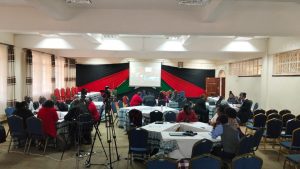
Workshop attendees participate in group discussions |
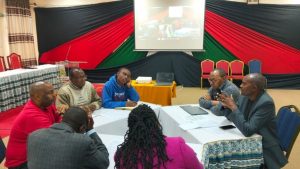
A small group discussing during the workshop |
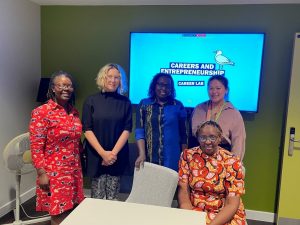
The study team meets the University of Sussex’s Careers and Entrepreneurship team (LtoR Anne Gatuguta (University of Sussex PI), Emily Huns (Head of Careers, Employability & Entrepreneurship, University of Sussex), Caroline Nderi (Kenyatta University Co-I), Jasmin Tse (Finalists Programmes Officer, University of Sussex), Purity Muthima (Kenyatta University PI) |
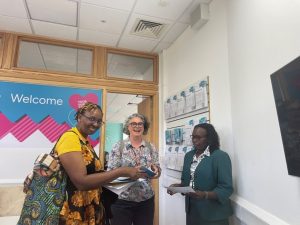
The study team visits the University of Brighton Careers & Employability team’s office (LtoR) Purity Muthima (Kenyatta University PI), Clare Griffiths (Business Development Manager, University of Brighton), Caroline Nderi (Kenyatta University Co-I) |
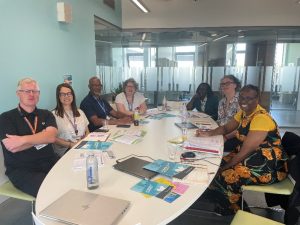
The study team meets the University of Brighton’s Careers and Employability team (LtoR Mark Eslick, Beth Thomas-Hancock, John Lynch, Katherine Whittaker, Caroline Nderi, Clare Griffiths, Purity Muthima) |
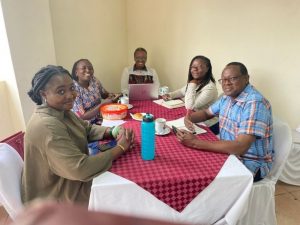
UK PI meets the Kenyan team (LtoR Salome Esendi, Caroline Nderi, Purity Muthima, Anne Gatuguta, Willy Mwangi) |
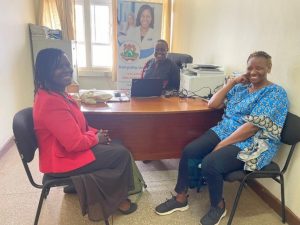
Study PIs Anne Gatuguta and Purity Muthima meet Dr. Titus Kahiga, Chair of the Department of Pharmacology and Clinical Pharmacy and Head of Collaborations, School of Health Sciences, Kenyatta University |
International Knowledge Exchange Visits: Researchers from Kenyatta University visited Brighton and Sussex Medical School in the UK exchanging ideas on mentorship models, transferable skills training and best practices. They had an opportunity to meet careers and employability teams from the University of Sussex and the University of Brighton. The UK PI also visited Kenya for meetings with the whole study team and staff from Kenyatta University. These meetings strengthened the collaboration and underscored the centre’s commitment to learning from diverse contexts. Discussions also included future collaborations across the different institutions.
Initial Data
Early data collection activities, including surveys and pilot studies have started to help identify the skills most needed by students. A survey of 157 students in Kibra Technical and Vocational Centre (Nairobi, Kenya) has revealed that while most young people feel confident about their readiness for work, critical skills gaps and the impacts of sexual and gender-based violence (SGBV) continue to threaten their employment prospects. In addition, gender stereotypes are highly entrenched in employability skills reflecting the deep-rooted cultural perceptions that continue to shape career opportunities. These findings alongside other data being collected will
inform our curriculum development.
Voices from the field
“The STaSH study will inform development of a training curriculum that will help bridge the
gap between academic learning and real-world opportunities, particularly for young women
who are disadvantaged in employment. We are investing in young people who will shape the
future of our communities.” Anne Gatuguta, BSMS, University of Sussex Lead “I am glad that participants expressed their joy arising from the diverse learning experiences” Purity Muthima, Kenyatta University Lead “I have enhanced online interview skills and liked the nice interaction.” Research Assistant “Soft skills are undervalued compared to technical skills, yet they are the bedrock of productivity. Youth often don’t take them seriously, and there is no common understanding of how to inculcate them. Adults themselves struggle with these skills; employers demand them but lack pathways to get hires trained.” Participating stakeholder
“We need to leverage technology to reach as many youth people. All the young out in the society
need them.” Participating stakeholder
Looking Ahead
Our data collection activities continue with a survey on Kenyatta University students and alumni currently underway. Interviews with key informants from government ministries, higher education institutions and other stakeholders are also ongoing. Future activities include curriculum development based on our baseline data findings and training of over 150 students. Physical space for the STaSH centre has been secured courtesy of Kenyatta University and set up will commence immediately ensuring a welcoming environment for upcoming activities. STaSH also plans to host subsequent stakeholders’ forums, ensuring the programme remains
responsive to evolving educational and labour market needs.
Acknowledgements
The STaSH Study is a collaboration between Brighton and Sussex Medical School, University
of Sussex, UK and Kenyatta University, Kenya. It is supported by funding from the British Council’s Going Global Partnerships Programme. The project team extends their gratitude to all students; management and staff from Kenyatta University, University of Brighton, University of Sussex and Kibra Technical and Vocational College; and stakeholders who participated in the study activities.
For more information or to get involved, please contact [a.gatuguta@bsms.ac.uk]. Visit our project website https://stash.ku.ac.ke/study-team/ and subscribe to our monthly newsletter.
Connect: STaSHInsta, KU Safety and Transferable Skills Resource Hub (STASH) | LinkedIn
STEPHEN BARASA WANYONYI
20 Mar, 2026As a KU alumnus I am delighted with this initiative. This hub will truly prepare many women and youths for employment by equipping them with key and essential skills. Good job.